Mobile Casino Not on GamStop and New Site Risks
 Available in GB
A mobile casino not on GamStop is an online gambling site outside Great Britain’s licensing system, so its app-like convenience does not bring UK protections with it. The Gambling Commission estimates 2.5% of people who gambled online in the past four weeks had used illegal sites. A fresh interface is not a fresh guarantee.

On 7 November 2026, the question is less whether a new casino works on a phone than what it has not yet proved. A clean landing page and a quick registration form are cheap. A functioning complaints route, a verifiable licence and a record of paying customers are harder to manufacture—and take time. That is the useful distinction behind this market’s mobile pitch.
British-licensed sites are the proper benchmark. They must verify identity before gambling, participate in GamStop and follow Gambling Commission rules on payment and consumer terms. Offshore sites are not licensed in Great Britain; UK protections and the UK complaints route do not apply. The Commission says offering commercial gambling services to people in Great Britain without its licence is illegal, including where an operator has a foreign licence. Offshore sites are not a way around self-exclusion: a GamStop exclusion holds for its full term and then remains until the person contacts GamStop to remove it. For support, GamCare’s National Gambling Helpline is free on 0808 8020 133, around the clock.
The word “new” deserves scrutiny of its own. New operators may have genuine overseas oversight, or a borrowed seal, a thin dispute process and terms written to buy time. A phone makes those terms easier to overlook. It does not make them smaller.
A Phone Is a Shopfront, Not a Licence
Mobile casinos not on GamStop are often presented as a neat answer to friction: open a browser, install nothing, and play. The technical part is ordinary. A responsive website can fit a small screen; an icon can make it resemble an app. Neither tells us where the operator is licensed, who owes the balance, or whether a complaint has anywhere useful to go.
There is a valuable official yardstick. The Gambling Commission’s analysis, published 5 November 2026, estimated that 2.5% of people who had gambled online in the preceding four weeks had engaged with illegal gambling websites; another 1.5% had done so in the previous twelve months. Those are separate time windows, not a market share to add up. Across the whole population, the four-week estimate was 0.6%. The same dashboard identified 586 illegal sites accessible to consumers in Great Britain in September 2026. These figures describe the problem’s reach, not the safety of any one site.
A new mobile casino may therefore be easy to find yet difficult to assess. The Commission can disrupt domains and refer URLs, but a site can shift address or reappear under another name. In its October 2025 report, the Commission said disruption produced an average 32% fall in engagement across 160 illegal sites with traffic data. That is meaningful enforcement, not a magic off switch. A disappearing domain can leave a player staring at a vanished cashier.
What Pay by Mobile Actually Buys
“Pay by mobile” usually means a payment charged to a mobile phone account or prepaid balance, not a payment magically protected by the phone network. The precise route and limits depend on the operator, payment provider and mobile network. The facts provided here do not establish a standard UK fee, deposit ceiling or processing time for these transactions, so confident tables promising one universal figure deserve a raised eyebrow.
For a pay by mobile casino not on GamStop, the crucial question is not simply whether the deposit button works. It is what happens when money leaves the site. A phone-bill deposit may be convenient, but it does not establish that withdrawals will return by the same route, that a third party can resolve a dispute, or that deposited funds are protected if the operator fails. Those details belong in the payment and withdrawal terms before an account is funded.
A mobile deposit casino not on GamStop may also display fewer details on a small screen. Scroll past the glossy cashier to find payment eligibility, currency conversion, fees, withdrawal method restrictions and verification requirements. Save or capture the terms in force before any transaction; a page that changes later is not a reliable memory.
| Payment or control | What the evidence supports | What it does not prove |
|---|---|---|
| Phone-bill or mobile-account deposit | A site may advertise the facility; exact availability and limits are operator-specific | No standard fee, limit or payout time is established here |
| UK-licensed payment acceptance | Since 31 January 2024, UKGC licensees must use a payment provider that qualifies under the Payment Services Regulations 2017 | Offshore sites are not bound by that licence condition |
| UK bank gambling block | Participating banks can decline transactions coded as gambling; the block is applied at card level | It is not a guarantee against every payment route |
| Withdrawal to a UK-licensed operator | Commission data for June–September 2024 found 96.3% of withdrawals cleared automatically | It is not an offshore performance benchmark |
The final row matters because the comparison is often missing from advertising. British-licensed operators have rules, oversight and routes for complaint. Offshore operators do not inherit those protections because their checkout accepts a British card or phone payment.
The Licence Is the Hinge
The licence is the first thing that changes when a site is new. A badge is only a claim; the authority’s own record is evidence. Great Britain’s Gambling Commission says a foreign licence does not authorise an operator to offer commercial gambling services to consumers here without a UKGC licence. That is the legal baseline, not a matter of taste.
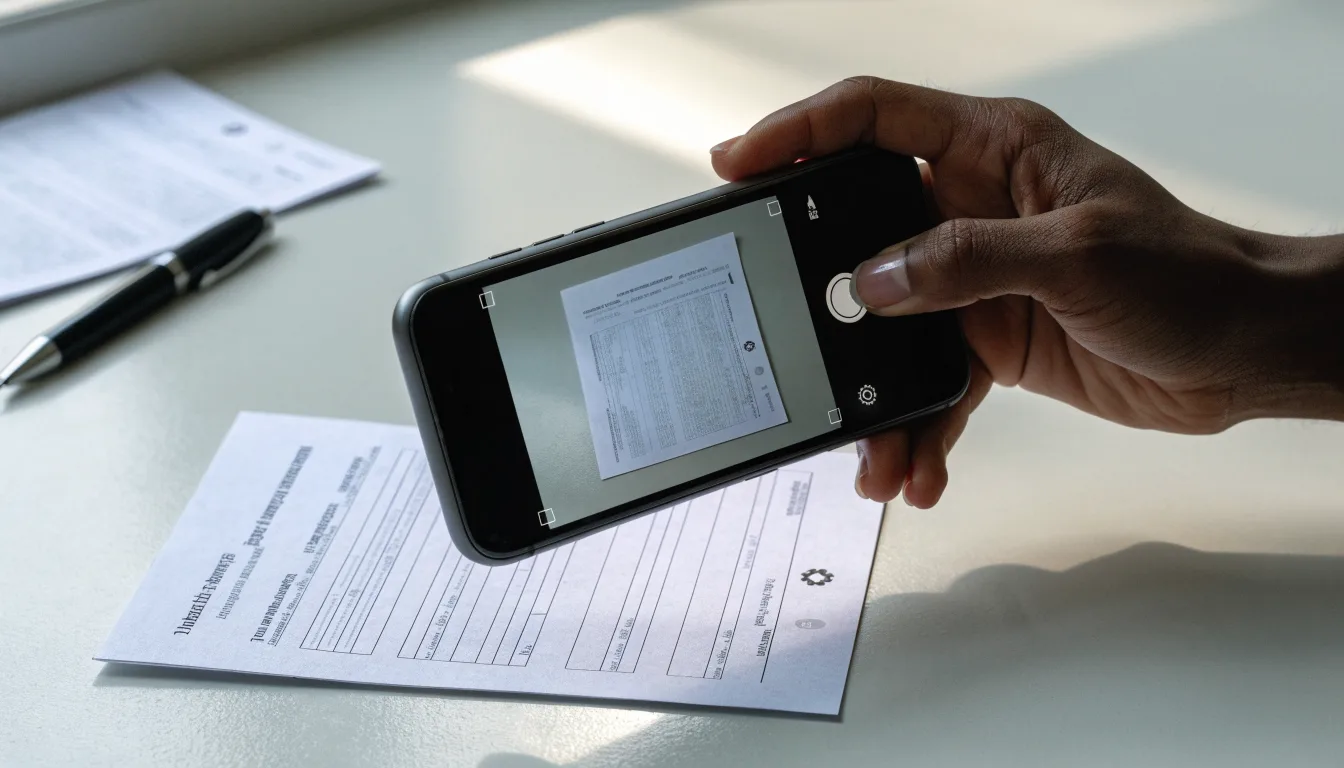
A genuinely current Curaçao licence, for example, is now issued under the LOK framework by the Curaçao Gaming Authority. The legacy orange certificates ended on 15 October 2025, and historic /JAZ numbers are not proof of a current licence. A Certificate of Operation should identify an approved player-facing domain and redirect to the CGA verification destination. A generic licence certificate is not interchangeable with that domain-specific certificate. In October 2026 the CGA said its former online portal would not return and it was working on an alternative domain-verification mechanism; a dead seal link in that transition needs careful checking, not blind trust.
First, the operator claims a jurisdiction and displays a certificate. Later, the domain, operator name and certificate must still match, and the regulator must be able to confirm the permission. A new site may be licensed abroad, but the licence’s scope, enforcement record and complaint process remain different from British oversight. Beware a seal that links nowhere, a certificate for another domain, a legacy sub-licence presented as current, or vague language such as “internationally regulated”. A logo is not a regulator’s answer.
Five Signs Worth Checking
The Domain Matches the Licence
Check the regulator’s own register or certificate service, not a logo embedded in the site. Compare the exact domain and legal entity, including spelling. A certificate for a sister site does not cover this one; with a fresh mobile domain, one extra hyphen can matter.
The Operator Names Itself
Find the company name and address in the terms, then see whether that same entity appears on the claimed regulator’s record. If the footer gives only a trading name, or the terms switch between companies, the account holder may have little idea who actually owes the balance.
Payment Terms Explain Both Directions
Read deposit and withdrawal sections together. Look for fees, currencies, supported withdrawal routes, identity checks and conditions that can pause payment. “Instant deposits” says nothing about withdrawals. A clause allowing repeated manual review or an undefined waiting period is delay dressed as procedure.
Complaints Have a Real Route
A credible operator identifies how to complain and the independent dispute-resolution provider, where applicable. The Commission’s own ADR route is for licensed operators after their internal process; it is not a backstop for an offshore site. Check the named provider’s own eligibility rules rather than assuming that “ADR” means an enforceable UK remedy.
The Safety Tools Are More Than Decoration
Look for account limits, time-outs, clear self-exclusion information and a visible customer-support route. Their existence does not make an unlicensed site equivalent to a UK operator, but their absence is revealing. If self-exclusion is in place, it remains in force for its full chosen term and afterwards until GamStop is contacted to remove it; offshore access must never be treated as a workaround.
Pay by Mobile Phone Bill Casino Not on GamStop Checks
The phrase pay by mobile phone bill casino not on GamStop sounds like a payment comparison. In practice, it is a test of the whole operator: who takes the payment, what record is kept, and what protections vanish outside the UK system. These are ordinary checks, not a promise that a risky transaction can be made safe.
- Establish the legal position. Check whether the operator has a UK Gambling Commission licence on the public register. If not, it is not licensed in Great Britain, whatever foreign badge it displays. This separates legal status from marketing language.
- Verify the claimed overseas permission. Go directly to the named regulator’s register or certificate tool and compare operator and exact domain. This catches outdated seals, borrowed certificates and claims that cannot be independently checked.
- Read payment and withdrawal clauses before depositing. Note fees, minimums, currency, available cash-out routes, verification triggers and any review wording. A mobile checkout can hide terms that a desktop page makes easier to inspect.
- Check identity and account details. UK operators must verify identity before gambling; offshore processes vary. Read what documents can be requested and when. Unclear verification rules can become a withdrawal dispute later.
- Find the complaint path and evidence trail. Record the operator’s legal name, terms version, payment receipt and the named dispute body. This will not create UK jurisdiction, but it makes inconsistencies and unanswered complaints easier to establish.
- Treat self-exclusion as binding. GamStop blocks accounts with participating Great Britain-licensed operators for the chosen term; it cannot be cancelled early and stays in place after the term until GamStop is contacted. An offshore site is not an escape hatch.
Why New Sites Can Turn Into Old Problems
The risks are not confined to crooked operators. A legitimate business can still have weak consumer recourse in a jurisdiction far from Great Britain. A new operator has little public history to inspect, and a fresh domain may be one of several addresses. Even a valid overseas licence is not a UKGC licence, and UK protections do not apply.
The UK baseline is stronger in specific, useful ways. Since 31 March 2020, all online gambling operators licensed in Great Britain must participate in GamStop under LCCP social responsibility code 3.5.5. UK operators must verify identity before gambling, and must not spring information requests on a customer at withdrawal if they could reasonably have requested it earlier—though a genuine legal obligation such as anti-money-laundering checks may still require information at that point. The Commission has no fixed maximum payout deadline, but fair terms and explanations for delays are required. There is no equivalent UKGC enforcement route against an offshore operator.
The payment promise is especially slippery. An operator may accept a phone-bill payment but route withdrawals elsewhere, apply a currency conversion, request checks, or impose terms whose fairness is difficult to challenge from Britain. A payment method is a rail, not a warranty. “Fast on mobile” describes the front door; the cashier is where the house rules live.
The scale figures also need discipline. The Gambling Commission’s estimate of 2.5% concerns online gamblers over four weeks, not all adults and not the proportion of stakes. H2 Gambling Capital has separately estimated £16.6 billion staked with illegal operators in 2025, but that is a market-intelligence estimate, not the Commission’s measure. A much smaller percentage of respondents can coexist with large aggregate stakes. The numbers answer different questions; combining them as if they were interchangeable is bad arithmetic with a marketing budget.
Questions About Mobile Casinos
Is a mobile casino not on GamStop legal in the UK?
The Gambling Commission says it is illegal to offer commercial gambling services to consumers in Great Britain without a Commission licence, even if the operator has a licence elsewhere. That is an offence directed at providing facilities, not a statement that an offshore badge creates British authorisation. Check the UKGC public register, not the site’s own description.
Does paying by mobile phone bill make a casino safer?
No. The payment route says how a deposit may be collected; it does not verify the operator, promise a withdrawal time or create access to UK dispute resolution. The supplied evidence gives no universal phone-bill fee or limit. Check the site’s written payment and withdrawal terms, and treat missing detail as a warning rather than an invitation to guess.
Can an overseas licence protect a British customer?
It can indicate that an overseas authority has issued some form of permission, but it is not a UKGC licence and does not make the site lawful to offer gambling in Great Britain. The regulator, the licence category and the exact player-facing domain must match. Complaint powers and practical remedies also differ, so “licensed” is not a complete answer.
Can someone use an offshore casino while GamStop is active?
GamStop covers participating online gambling companies licensed in Great Britain, rather than every gambling service worldwide. That limit is a description of the scheme, not a recommendation to seek an uncovered site. The exclusion cannot be cancelled during its chosen term and remains after it ends until the person contacts GamStop to remove it.
What should happen if a mobile casino delays a withdrawal?
On a UK-licensed site, the operator should explain a delay, and it cannot demand at withdrawal information it could reasonably have asked for earlier, subject to other legal duties. A complaint unresolved after eight weeks may be referred to an approved ADR provider. Those UK routes do not apply to offshore operators; keep records and do not assume the Commission can recover funds.
Where can people get gambling support in Great Britain?
GamCare operates the free National Gambling Helpline on 0808 8020 133, 24 hours a day, every day of the year; the same number is available through live chat and WhatsApp. The service is support, not a crisis line. For immediate danger, emergency services are the appropriate route. GamStop and blocking software can add separate barriers, but neither makes offshore play a safe substitute.
The Small Screen Changes Nothing Essential
A new mobile casino can make an unproven operator look settled in a few taps; the legal and practical distinction remains the licence, the terms and the remedy. The Commission’s September 2026 dashboard counted 586 illegal sites accessible to Great Britain. For confidential support, GamCare’s free National Gambling Helpline is 0808 8020 133, open 24 hours a day.
Casinos Not on GamStop – Casino Not on GamStop
Content created by the «Casino Not on GamStop» team